
13 Best Kayak Trailers in 2026 | +25 Tested


Our writers and editors look for the best Kayak Trailers available. We test, research, and review the best products in different categories with a focus on quality, performance, and the overall value for the price.
You’re here because you need a Kayak trailer!
But now you’re probably wondering: What kind of kayak trailer do I need, and where do I look? We are hear to help you.
First, let’s dive down into what you’ll need to know before you buy a Kayak trailer:
- How well does the Kayak or Canoe stay attached to the trailer
- Materials of the Trailer
- What size of kayak will this trailer load, and does this fit your needs
- Handling of trailer, and if you’ll be able to load it yourself
- Will you be driving with one or several kayaks – You can find trailers sizes to suit your needs
To know more about what to consider before buying a trailer for your Kayaks, go to our buying guide below.
To make this guide complete, we have assembled a round-up of the best kayak trailers on the market right now. Scan through our top picks and decide for yourself what model of a kayak trailer seems to be the best bet.
If a Kayak Trailer is not your jam, a Kayak Rack may be more suitable.
The Top 5 Kayak Trailers in 2026
-
1
Best Overall: Malone MicroSport -
2
Loads 1000lbs: Malone MegaSport -
3
Most Secure: Yakima 78-inch -
4
-
5
All the Kayak Trailers We've tested
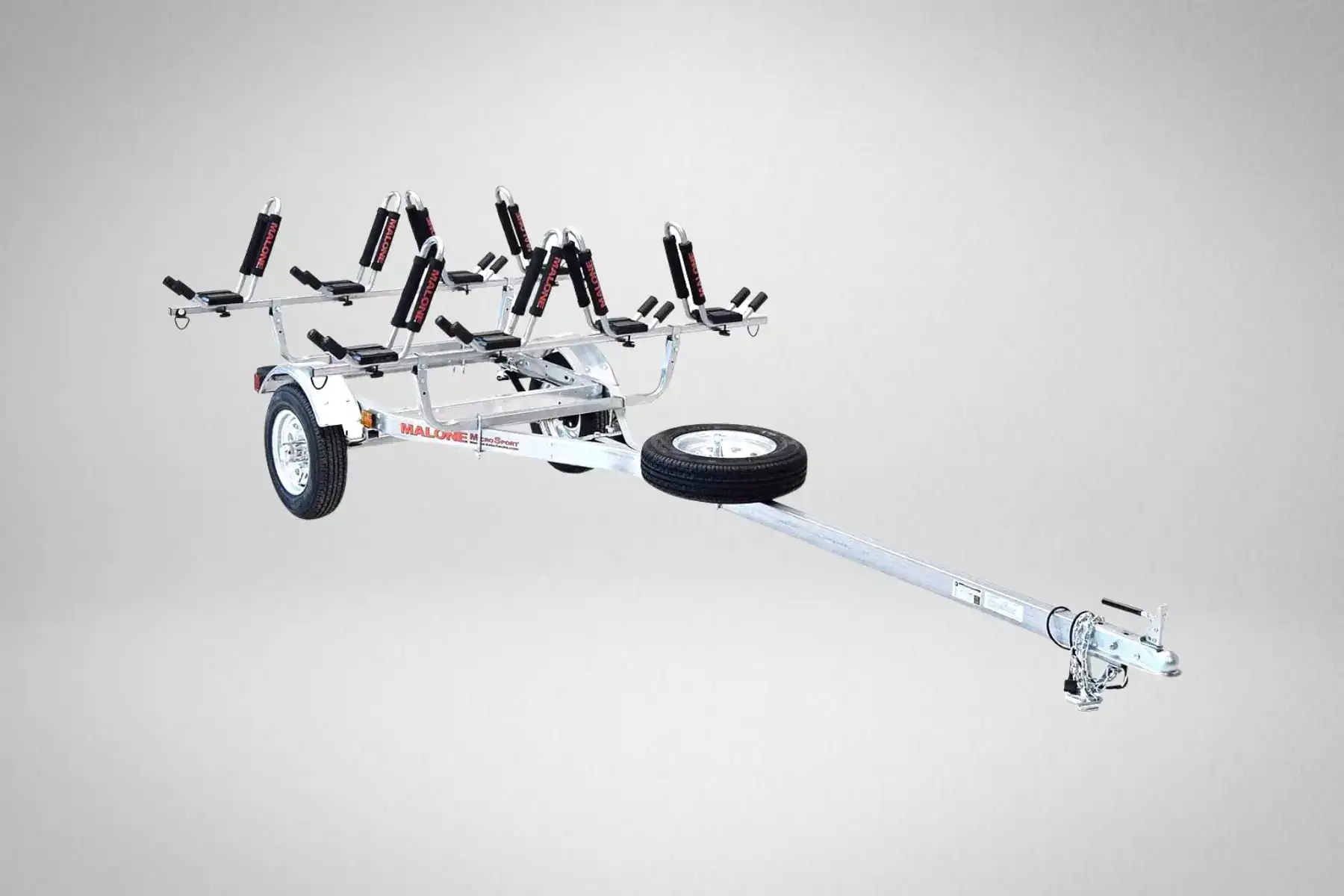
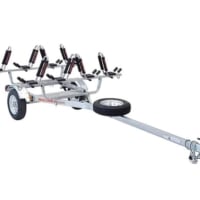
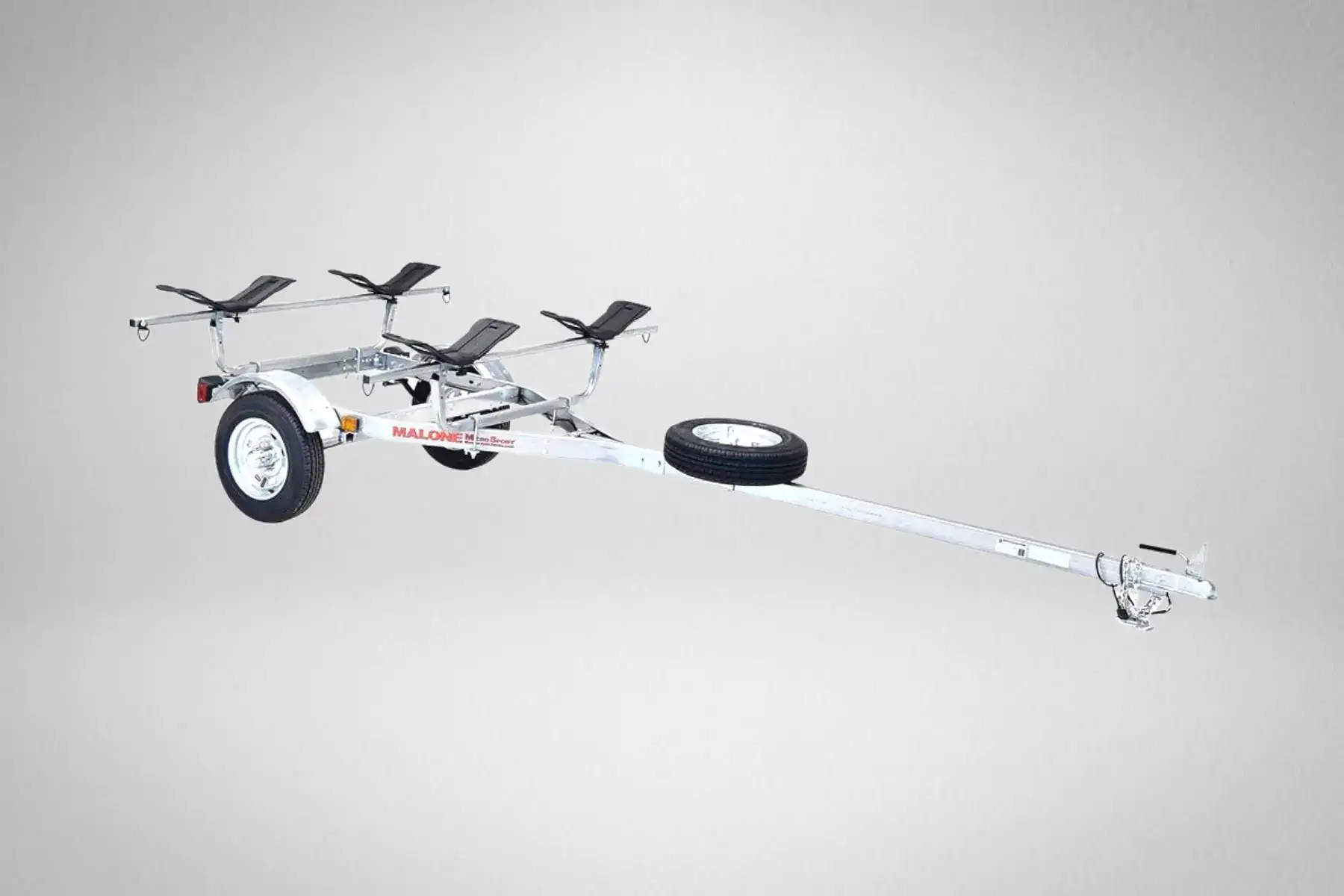
If you are familiar with the auto racks distributors, you have probably heard of Malone. It is well known for manufacturing equipment with a fine blend of reliability, practicality, and affordability.
This model of kayak trailer developed by the company is one of a kind – it can withstand up to a whopping 350 pounds of load.
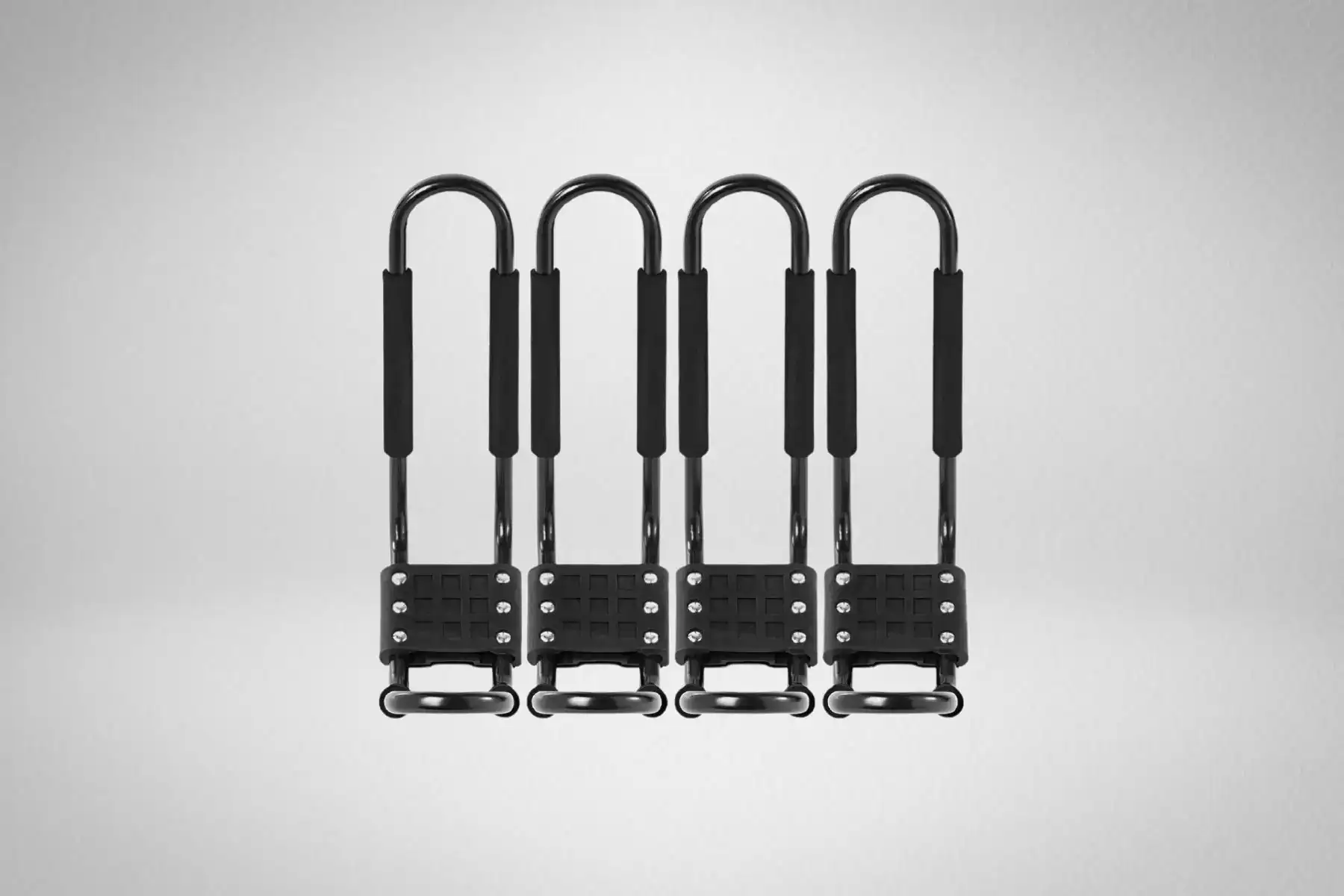
Stack 4 kayaks or paddle boards on top of it and it won’t budge. The steel frame has a galvanized coating further encouraging the long-lastingness of the gear. The trailer is equipped with J-Pro2 style saddles that make it easy to transport kayaks, surfboards, and bikes from A to B. Surely, the 19-inch tongue plays a role in it too.
The trailer doesn’t take a lot of effort to assemble thanks to the instructions that come with it and the pre-built parts.
- Material: Galvanized Steel
- Dimensions: 159 x 65 x 48.5 inches
- Frame: 78 x 164 inches
- Weight Capacity: 350 pounds
- Assemblance Time: 2-3 hours
Things we like:
-
 The quality of the trailer is great
 -
The wide frame of the trailer allows you to fit multiple pieces of equipment at once
-
The weight capacity is good for two Kayaks
Things we don't like:
-
 Wiring are a bit fragile
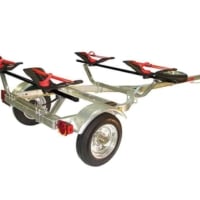
With this trailer, you can carry multiple kayaks and there are many options of accessories to add on. Malone MegaSport kayak trailer is a force to be reckoned with.
With a 1000 pounds of weight capacity, it can be used to carry several kayaks + assessories all the way to the destination without worrying about losing any of them along the way.
The trailer is built from Galvanized steel and aluminum, which ensure the highest possible durability of the tool. The assembling can be done in a few hours with the help of instructions from the manufacturer.
Once your trailer is fully assembled, you are ready to set out on a kayaking or paddleboarding adventure straight away.
- Material: Galvanized Steel, Aluminum
- Weight Capacity: 335 lbs.
- Cross-rails: 60 inches
- Weight: 240 pounds
- Saddle-Style Carriers: Yes
Things we like:
-
A really good heavy-duty tailer
-
Loads over 1000lbs
-
The racks are exceptionally sturdy
Things we don't like:
-
Most expencive trailer in the test
Where to buy Yakima 78-inch:
Amazon
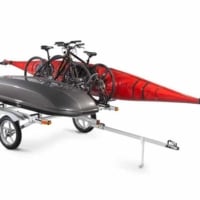
The high price tag of the Yakima 78-inch kayak tailor is fully justified – you get a kayak carrier that has unique features built into it for the best possible watercraft carrying experience.
Starting from the shock-absorbing system that promotes the smooth ride with no damages from bumpy roads and ending with an anti-theft precaution that keeps your load secure, there is nothing this gear is short on.
The locking levers are embedded with keys that protect your stuff from being stolen, while the 300-pounds weight capacity allows the transportation of heavy-duty equipment. The long crossbars are compatible with a wide variety of products, meaning that you can secure a bike, a surfboard, or both to the trailer.
The best part is – you can use the kayak trailer as a handcart once it is detached from the car.
- Material: Aluminum
- Dimensions: 161.2 x 10.2 x 3 inches
- Crossbars: 78 inches
- Weight Capacity: 300 pounds
- Anti-Theft Protection: Yes
Things we like:
-
The quality of the material is high, which means that this trailer will last you a long time
-
The carrying handle that comes with the trailer can quickly turn it into a handcart
-
The ability to withstand up to 300 pounds of weight is impressive
Things we don't like:
-
The price tag is high
Where to buy Yakima 78-inch:
Amazon
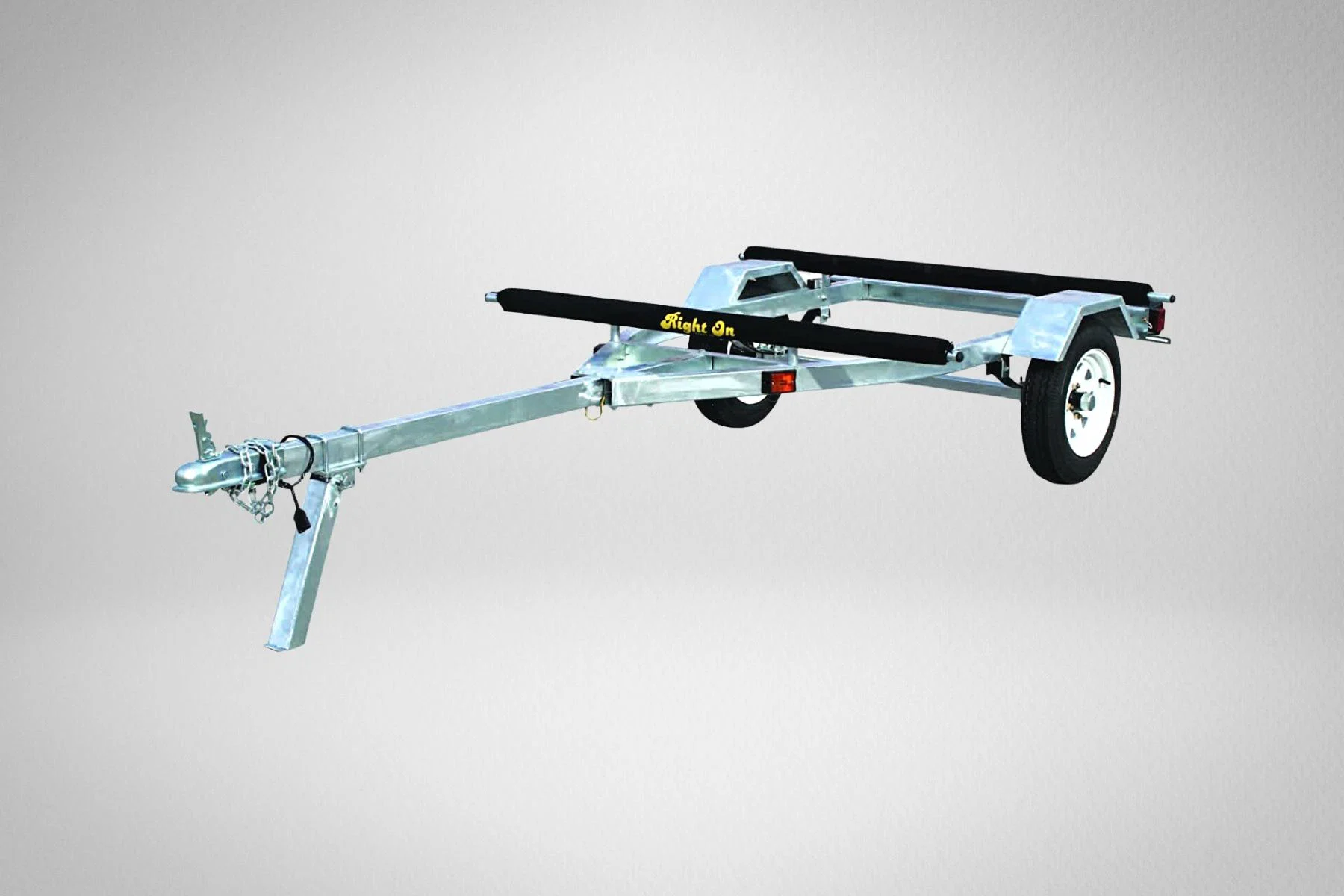
Where to buy RIGHT-ON TRAILER:
Amazon
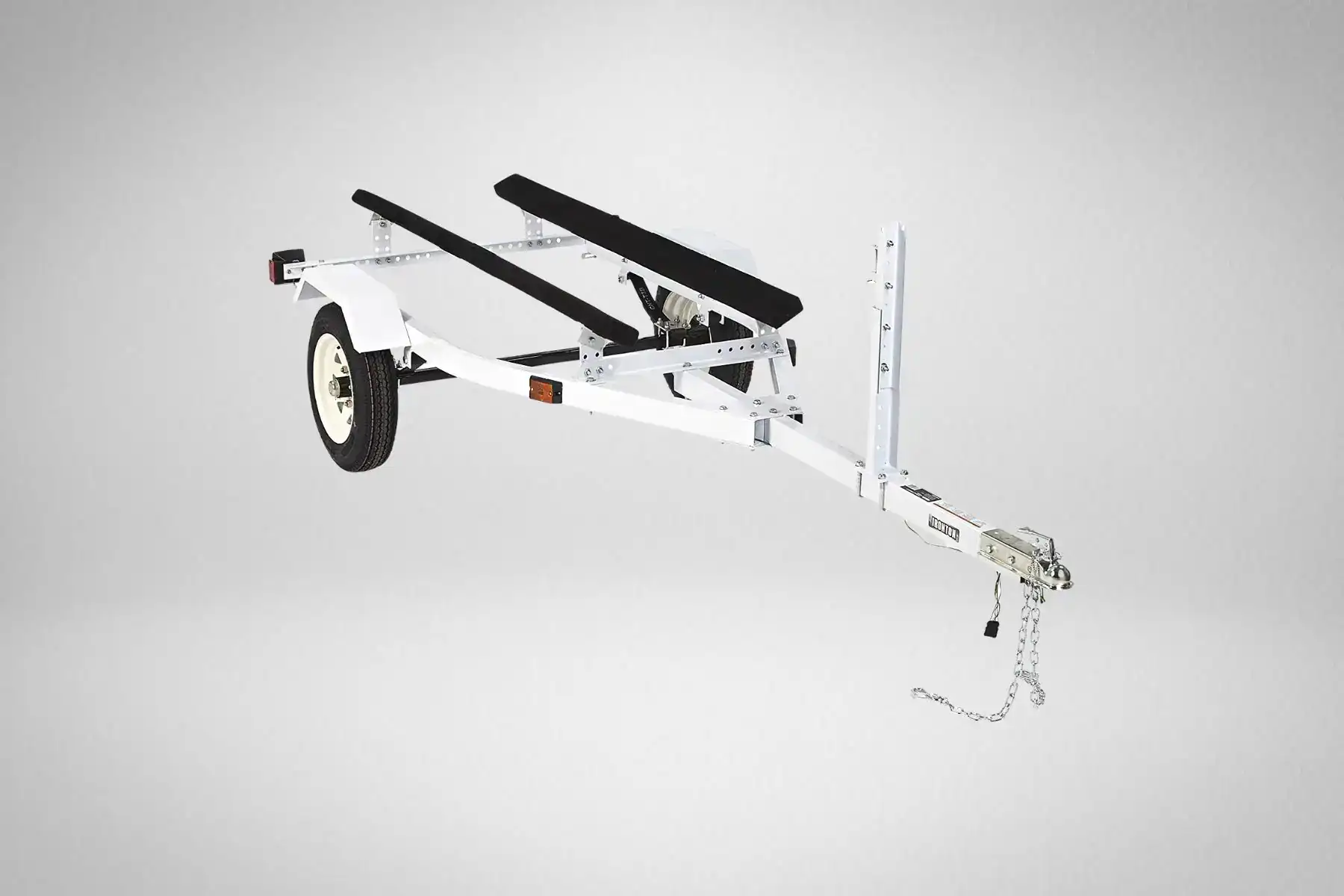
Crafted from strong yet lightweight Galvanized steel, this ruff-sport gear by RIGHT-ON TRAILER is a worthy contestant for those looking to attach their kayak trailers to the car. Due to its high weight capacity and big dimensions, you can fit a few kayaks, a kayak plus bicycle, or stand up paddleboards on top of it.
Besides being spacious, the trailer has LED lights that notify drivers about turning or breaking. This is particularly useful when your load is huge and the traffic is heavy. The manufacturer incorporated soft springs that foster a smooth ride and a robust frame that doesn’t allow the road vibration to affect the load.
Feel free to drive long distances and expect your outdoor gear to stay put – there is simply no way it won’t arrive safely at the destination.
- Material: Galvanized steel
- Wheels: 12 x 4.80 inches
- Crossbars: 64 inches
- Box Frame: 36.8 x 32.1 inches
- Street Legal: Yes
Things we like:
-
The two-tier style rack allows you to transport multiple items at the same time
-
The LED lights come in handy on the road
-
The soft springs help to absorb the shock
Things we don't like:
-
The metal paint coat has the tendency to peel off over time
Where to buy RIGHT-ON TRAILER:
Amazon
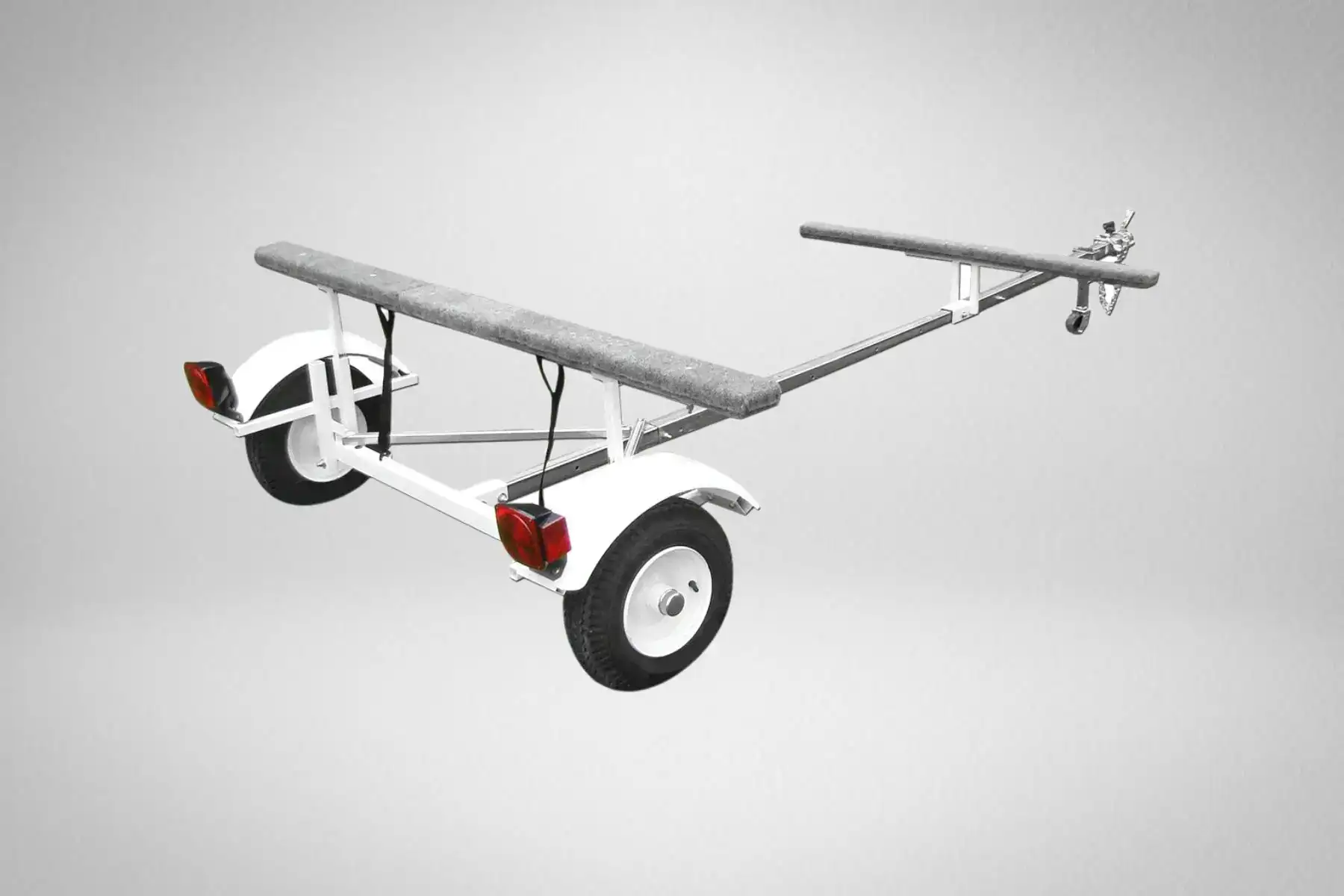
Where to buy Portage Pal T-2000:
Amazon
The term ‘Galvanized’ is not one brands just throw around – it means quality, it signifies durability, and it catches water sport enthusiasts’ attention. The Portage Pal T-2000 kayak trailer has it all and even more. It can accommodate a couple of kayaks and canoes of 12 feet long and safely transport them to their destination.
Thanks to the coil spring suspension, the ride promises to be smooth regardless of the surface you are dragging your carrier on. The 8-inch wheels along with the 4.8-inch tires are there to foster the plain sailing even further.
You will find a spare tire included in the packaging to be a nice add-on that gives you peace of mind in case a flat tire happens. It is indeed a great alternative to the expensive Malone that doesn’t compromise any key features.
- Material: Galvanized Steel
- Wheels: 8 inches
- Tires: 4.8 inches
- Length: 10 feet
- Weight: 125 pounds
Things we like:
-
The entire trailer is constructed from galvanized steel, which speaks volumes about its durability
-
The trailer can fit more than just 2 pieces of watercraft
Things we don't like:
-
It can be hard to get a hold of
Where to buy Portage Pal T-2000:
Amazon
Related Reviews
What features should I look out for in a kayak trailer?
Before committing to purchasing a kayak trailer, you need to outline the most prioritized features for you in a watercraft. While some kayak carriers will be made from abrasion-resistant materials, others will have high capacity that is great for family trips. You should consider the type of material, the kayak is made of, the size of wheels and tires, and your budget.
Besides the general one-person kayak, there are also tandem kayaks that tend to be longer than the regular ones. For this reason, it is essential to choose a kayak trailer that is able to withstand kayaks on the longer (and perhaps even heavier) side. It is better to avoid overhang as it drastically raises the risk of your gear falling and causing an accident. The same applies to ocean kayaks.
If you are planning on going on a family/friends kayaking trip, the trailer has to be able to accommodate multiple pieces of equipment. It has to be built in a way that handles hefty gear and doesn’t dislodge under pressure. When you add other outdoor equipment like bikes, paddleboards, or a surfboard, you are bound to reconsider the type of trailer you are willing to invest in.
The most popular kayak trailers on the market are usually crafted from high-quality steel that combines low weight and a high level of rust-resistance. These two characteristics are crucial – you don’t want to be lifting heavy gear and thus getting discouraged to go kayaking, and experiencing decay that appears as a result of the trailer’s contact with water.
A rule of thumb states that smaller tires on a trailer are great for transporting lightweight kayaks, while the bigger tires have the power to accommodate heftier kayaks. Trailers with small-ish tires are a more economically-conscious choice as they produce better gas mileage. Those with big-ish tires, on the other hand, can handle rough terrain that has rocks and dirt.
Your budget is certainly the main player when it comes to deciding what kayak trailer to go for. Be prepared to pay more for a trailer from a reputable brand and even more if it can accommodate several kayaks. If you are on a tight budget, however, a used kayak trailer can be a better choice for you.
If you already have a Kayak Trailer or you just bought one, leave a comment in the comment section below and share your experience with it.
Frequently asked questions
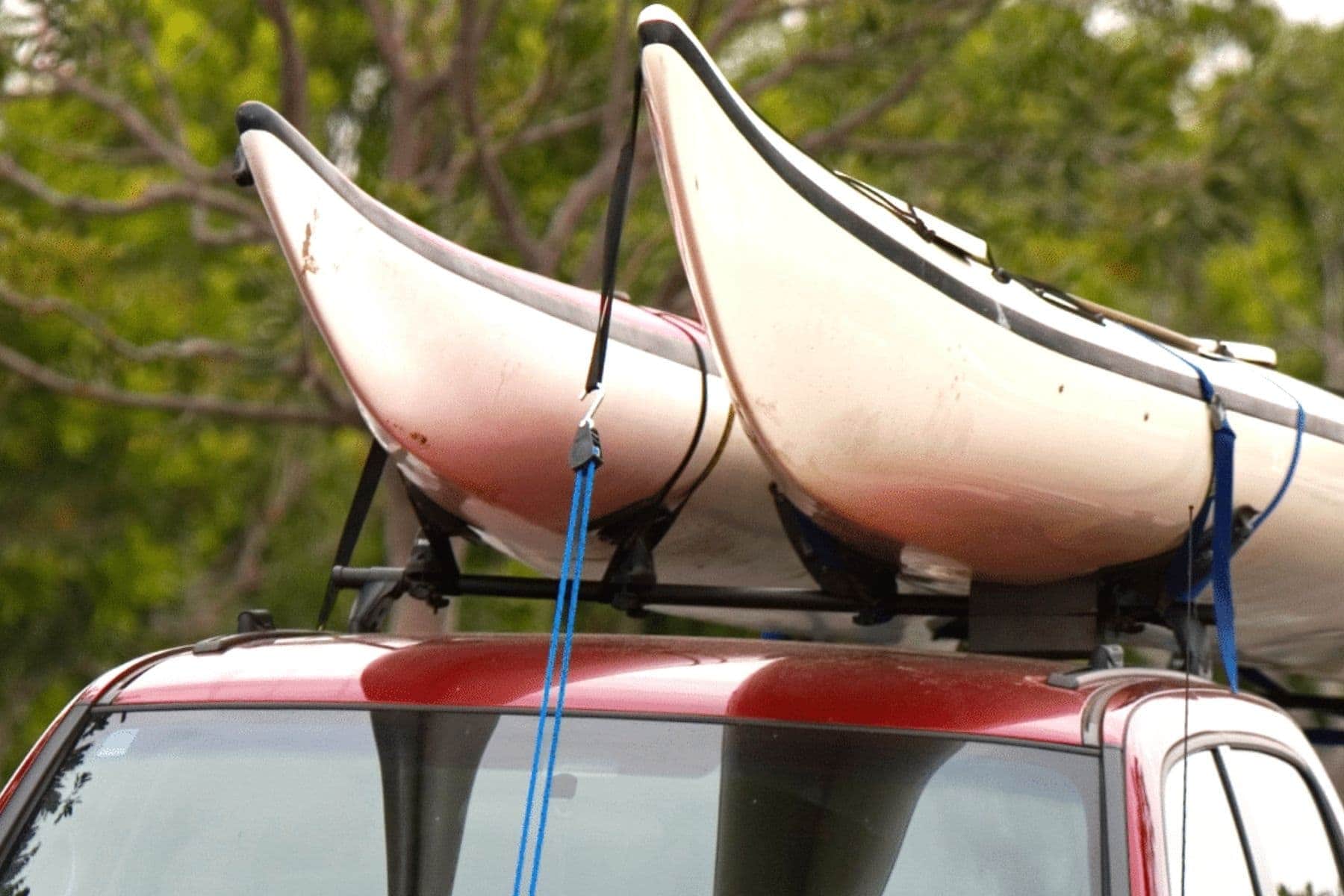
When securing a kayak to a trailer or vehicle, you need to make sure it’s strapped in safely. This way you will be able to reach the destination without any mishaps along the way. To do so, you need to utilize the straps that come with the trailer (or you need to purchase separately) that will help you control the tightness of the attachment.
Keep in mind that every trailer has different attachment systems, which means you should explore them before purchasing the trailer. That being said, more often than not you will find at the very least 2 securing points so that your kayak stays in place all throughout the transportation process.
You should rehearse securing your kayak a few times before you actually venture out for a ride – this will ensure the optimal position of the canoe. When securing the watercraft, the attachment straps have to be straight with no tangles in sight. If you happen to miss a few knots, the chances of losing your kayak along the way dramatically increase. The same outcome can occur if you secure it too tightly – the straps will rip apart.
A proven way to check if your kayak is adequately secured is to push it when it is strapped to the trailer/vehicle. If it doesn’t budge, you are good to go.
There are no restrictions associated with traveling with a kayak trailer. Since you will most likely fly with kayak only and drive long-distance with a kayak trailer attached to the car, traveling is not off the radar for paddling enthusiasts.
Before embarking on a faraway trip, however, you need to make sure your kayak trailer’s weight stays in the safe towable limit, and your watercraft is properly secured. In case you are planning on flying, check with your airline’s guidelines before arriving at the airport in order to avoid any unpleasant ‘surprises’.
You shouldn’t have issues securing your kayak to the trailer all by yourself, especially if it’s lightweight gear. If, however, you are not able to, you should ask a friend or a family member to help you out so that you are not worn out by the time you’re about to start kayaking.
Kayak trailers are usually not heavy – you can easily hook them up to your car’s hitch if you place them close to each other. To make things even easier, make sure you attach the trailer to the car before you secure a kayak to the trailer.
Placing your kayak may be a two person task if you have bought a Kayak Rack for the top of your car.
In fact, storing a kayak vertically is the best way to store the watercraft without damaging any of its parts. The best way to do it is to turn your kayak in a vertical position and let it rest against the wall. Kayak’s cockpit has to be facing out when stored in this position. For your gear to not fall, make sure it is stored at a slight angle with the bow facing the ceiling.
Ideally, you should put some form of a cushion underneath the kayak in order to protect one of its ends from getting worn out. A few towels and a wooden crate work wonders for keeping your kayak in place.
To prolong the life of your kayak trailer, you need to take good care of it. The easiest way to do so is to precisely follow the instructions on how to use it and not exceed the weight it can handle. While at the beginning you might not notice any damages, your kayak trailer will start deteriorating sooner or later.
Besides using it as intended, you should examine your kayak trailer for signs of wear and tear after every kayaking trip. When you observe deep wrinkles in the metal parts of the equipment or spot any damage to its wheels, it is time to repair your trailer or get a new one (if your budget allows). Familiarize yourself with the warranty you get from the manufacturer and resolve the issue before you embark on your next kayaking adventure.
 Back
Back




Comments